Arbitrage Crypto Scanners and the New Financial Landscape: Balancing Innovation and Oversight

More than $100 billion flows through cryptocurrency exchanges every day, creating small gaps in prices that can vanish in seconds. These gaps, known as arbitrage opportunities, are no longer the exclusive domain of seasoned traders with lightning-fast spreadsheets. A new wave of tools has emerged to automate the hunt, making crypto arbitrage accessible to a wider audience and reshaping how digital markets work.
Among these tools, the arbitrage crypto scanner has become a game changer. It tracks hundreds of exchanges in real time, alerting users when a price difference is big enough to act on. While this sounds like a golden ticket, it also draws the attention of regulators and politicians who worry about fairness, manipulation, and financial stability. This duality, innovation on one side and oversight on the other, defines the current moment in cryptocurrency trading.
How Arbitrage Scanners Boost Market Efficiency
Price gaps between exchanges are natural, especially in a market that never sleeps. When a trader spots these gaps and moves quickly, they earn a profit while also pushing prices back into balance. This creates a more efficient market for everyone. Arbitrage scanners speed up this process by crunching the numbers automatically, reducing human error and allowing even small players to compete with larger firms.
Efficiency has its benefits beyond profit. It helps reduce volatility, smooths out price swings, and fosters trust in the crypto ecosystem. For newcomers, it removes some of the mystery around trading. For experienced investors, it offers a way to diversify strategies without being glued to multiple screens all day.
The Political Debate Around Regulation
Governments across the world are still deciding how to regulate cryptocurrency trading. Some see arbitrage as a legitimate way to keep markets honest, while others fear it could be used to launder money or manipulate prices. In the United States, for example, members of Congress have called for stricter reporting requirements on high-frequency traders. In Europe, new rules under the Markets in Crypto-Assets (MiCA) framework will soon demand more transparency from platforms and traders alike.
The heart of the debate lies in balance. How can regulators protect investors without stifling innovation? Arbitrage scanners highlight this tension. They embody the promise of technology but also test the limits of existing laws. The outcome of this debate will shape how accessible and profitable crypto arbitrage remains in the future.
Operating Within the Law
Using tools like an arbitrage crypto scanner does not automatically mean breaking the law. However, traders must be mindful of compliance. This means understanding tax rules in their country, following anti-money laundering (AML) requirements, and keeping detailed records of every transaction. It also means choosing reputable exchanges with clear policies and reliable withdrawal systems.
Here are simple tips to stay compliant while trading:
- Register with exchanges that have strong security and regulatory credentials.
- Keep transparent records of trades for tax purposes.
- Understand withdrawal limits and fees before moving funds.
- Stay updated on new regulations in your region.
Risks and Responsibilities
“An algorithm can find the door, but you still have to walk through it.”
Arbitrage opportunities may seem like free money, but they carry risks. Transfer delays, sudden price changes, or frozen accounts can turn profits into losses. Scanners make the process faster but not risk-free. Users must still act wisely, test strategies with small amounts first, and avoid overleveraging.
Scanners are a tool, not a guarantee. They can highlight opportunities, but decision-making remains in the hands of the user. As one experienced trader said, “An algorithm can find the door, but you still have to walk through it.” This mindset helps protect against reckless moves and keeps trading sustainable.
The Future of Crypto Arbitrage
The next few years will define how arbitrage fits into the broader financial system. As institutional money flows into crypto, competition for price gaps will intensify. Scanners will likely become smarter, integrating artificial intelligence to predict opportunities before they appear. At the same time, regulatory bodies will refine their approach, setting clearer rules for automated trading.
For everyday traders, this future offers both promise and caution. Innovation opens doors, but oversight will determine how wide those doors stay open. Those who learn the rules, use reputable tools, and respect the limits of the system will be best positioned to benefit.
READ ALSO: The Promise of Cryptocurrency – Freedom, Democracy, Equality
Conclusion
Arbitrage scanners have already transformed how digital assets are traded. They bring speed, clarity, and a sense of fairness to a market once dominated by insiders. Yet they also invite new scrutiny from governments and watchdogs. By understanding the risks, respecting regulations, and choosing tools like an arbitrage crypto scanner responsibly, users can navigate this new financial landscape with confidence and integrity.
Understanding the Latest Developments in Global Finance and Politics
The Ongoing Tensions in Global Politics and Their Financial Impact
 The tug-of-war between world powers has created waves in the financial markets in the current political climate. The geopolitical landscape has become a key driver for economic shifts, from fluctuating stock prices to disrupted supply chains. The financial markets feel the heat as nations grapple with diplomatic relations and internal challenges.
The Shift in US-China Relations
One major focal point is the US-China relationship. Trade deals and tariffs continue to play a significant role in global markets. Both countries strive to maintain economic dominance, impacting the stock market volatility. Investors are closely monitoring any political developments, as these have direct financial consequences.
The Role of Central Banks in Political Decisions
Another vital factor is the increasing influence of central banks in political decisions. Interest rates and monetary policies are tools that governments use to navigate through political unrest and economic downturns. Financial markets often react swiftly to signals from central banks, creating a cycle of political maneuvering and financial adjustments.
The Impact of Elections on Economic Stability
Political elections around the world have a direct influence on the economy. As leaders change, their policies reshape industries, influence market confidence, and affect the general economic health of nations. Investors monitor elections closely to anticipate shifts in financial stability and market behavior.
Key Takeaways
- The political landscape is a key driver of financial market trends.
- US-China trade relations are pivotal in determining market stability.
- Central bank policies are increasingly interlinked with political decisions.
The current trends are a reminder of how interconnected politics and finance are and how every move in one field can ripple through the other.
Harris and Trump’s Proposed Budgets Analyzed by Penn Wharton
 Presidential candidates Kamala Harris and Donald Trump are trying to win voters by disputing the viability of the other’s economic agenda for generating long term economic growth. Yet according to the analytical reports of the Penn Wharton Budget Model (PWBM), Trump’s proposed budget will likely increase the country’s budget deficits by $5.8 trillion over the next decade, which is five (5) times more than the projected deficit of VP Harris’ proposed budget.
PWBM by the way is a non-partisan, research initiative of the University of Pennsylvania to provide transparent, accurate and accessible economic analysis of major fiscal budget projections. The purpose of which is to aid major US legislation although not for recommendation purposes.
Pen Wharton’s Comparative Analysis of Trump’s Proposed Budget Vs. Harris’ Budget Proposal
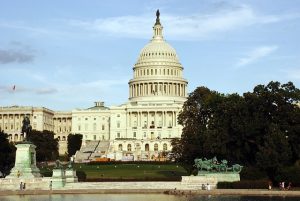 Trump’s 2025 program intends to fund the government’s economic platform by imposing 60% tariffs on all Chinese imports and 10% on all imports regardless of origin. VP Harris on the other hand, proposes raising corporate taxes to 28% from the current 21%. The increase though needs Congressional approval before it can be implemented.
Whereas, Trump’s plan of raising tariffs can be implemented through issues of Executive Orders in the same way he did during his 2017-2020 tenure. However, economists are warning that a repeat of the former president’s hard line tariff rules will likely reignite price increases of consumer goods; notwithstanding that inflation has only begun to recede.
China Dealing with Population Crisis as Chinese Women Rejects Pregnancy Incentives
 Now that China’s birth rate has dropped to a critical level, the Chinese government is encouraging women to get married and have more children but many refuse to do so. China’s birth rate has been in a free fall since 2017 despite the scrapping of the government’s previously enforced one-child policy in 2015.
As current data reveal that the nation’s present population of 1.4 billion is now dominated by ageing people the numbers could drastically drop down to roughly about half a billion by 2100.
About China’s Current Population Growth Campaign
Contrary to the Chinese government’s expectation of a baby boom after the one-child policy turnabout in 2015, the current population growth campaign launched by the Communist Party has not produced a significant impact.
The government had in fact, built new birth-friendly maternity wards and child-friendly preschools, while encouraging the opening of baby centric businesses. Moreover, the government is offering thousands of yuan to couples who will have at least 3 children as seen in propaganda materials strewn across public places in China.
There are even statues of couples or mothers with 3 kids in tow. Even textbooks have been modified to instil among young people, a baby-friendly culture of growing a family with at least 3 children.
While many have welcomed the change, the majority of Chinese women do not. They have become wary of the child-caring and child-raising responsibilities they have to face if they bring more than one child into the world. Still, the Communist Party includes as incentive to married working couples, longer maternity and paternity leaves.
Chinese Women are Rejecting the Government’s Population-Growth Incentives
 There are reports about groups of parents and young women in social media sites who have become activists in a way, by refusing to be swayed by their government’s enticements.
Apparently, the trauma of the harassment experienced by parents under the previous one-child policy is still fresh in the minds of many Chinese women. Reports have it that the younger generation of women across the country have no intention of giving in to the government’s new demand even if enticements turn into pressure.
Actually, many in China are expressing resentment against the current measures being imposed by the Communist Party under the leadership of Pres. Xi Jinping. The Party’s latest policies are being viewed by many citizens as attempts to shape their private lives.
Understanding Compensatory Damages that Allow Granting of Car Accident Loans
 The web page https://pcfmoney.com/financial-assistance-after-a-car-accident contains information about providers of immediate legal funding for victims incapacitated by a vehicular mishap. Although expecting a car accident settlement, family members like a spouse, child or parent of an automobile accident victim can avail a lawsuit loan from a lawsuit loan company willing to pay the settlement proceeds in advance.
Generally, a lawsuit loan provider can do so, in as fast as 24 hours after processing; whilst applying a low interest rate and rendering the best customer service care. Approval can be quick because applying for a lawsuit loan does not call for positive background checks, high credit scores or payment of high-end legal fees.
The spouse, parent or child of an auto accident victim no longer has to feel apprehensive over the amount of bills that has been mounting faster than the speed by which the auto accident claim is being processed.
It’s important to secure the services of a reputable lawsuit lending company to ensure that a car accident loan is being accessed rather than being claimed as settlement of a personal injury lawsuit.
Three Types of Damages Determining the Eligibility of a Personal Injury Victim to Claim Pre Settlement
 There are different types of damages arising as outcomes of a personal injury case; namely punitive, non-economic and economic damages. They are collectively known as compensatory damages, which the court presiding over the personal injury lawsuit hearings will award upon conclusion of the automobile accident lawsuit.
Punitive Damages
Punitive damages the least common type awarded by courts. Mainly because the purpose of imposing this type of damage is to punish the defendant and not necessarily to reimburse the victim or his beneficiaries for the losses suffered as a result of the defendant’s malicious bad behaviour, misconduct or malpractice.
Non-Economic Damages
Depending on the merits of the case, a court would award non-economic damages based on intangible injuries or losses. Non-economic injuries may include
Severe and chronic pain caused by physical trauma;
Mental health issues and emotional breakdowns.
Loss of functions and impaired mobility caused by the physical injuries. (more…)
House Democrats’ Campaign Coffers Brimming with Member Contributions
 House Democrats are bragging about their early substantial fundraising hauls during the first quarter of this year (2023) while highlighting information on how they achieved the phenomenal feat. The information gathered from records filed with the Federal Election Commission (FEC) confirmed that the substantial increase in the House Democrat campaign fund was largely due to huge contributions, and transfers of PAC leadership funds in addition to the raised membership dues. The FEC by the way, is the independent body tasked to administrate and enforce laws governing the raising and using of political campaign funds of the House of Representatives, The Senate, The Vice Presidency and The Presidency.
Yet many are not impressed with the increment because it places doubt over the ability of House Dems to raise funds outside of their own resources. Still, according to former House Speaker Nancy Pelosi (D-California), it’s common for the Democratic Party to raise membership dues every time there is a new leader.
Highlights of the 1st Quarter Substantial Increment in Democratic Campaign Funds
 Representative Jim Clyburn (D-South Carolina) who contributed $150K in the first quarter of 2021, doubled his contribution to $300K for this year’s first quarter. Massachusetts Rep. and Democratic Whip, Katherine Clark likewise doubled her contribution with a $500K check.
Gregory Meeks, a New York Democratic Rep. tripled his 2021 1st quarter contribution by giving a check for $150K.
Hakeem Jeffries (D-New York) made transfers from his leadership PAC that totaled $7.5 million, more than the $6.2 million transferred by incumbent House Speaker Kevin McCarthy.
Strategic Financial Management For Towing Services
Strategic financial management means not only managing the finances of a company but also managing them with the intention of succeeding. One example is achieving the company’s long-term goals and objectives and maximizing shareholder value over time.
Key recommendations for towing San Jose financial management
- Strategic financial management is about creating long-term profits for the towing san jose business.
- It aims to maximize the return on investment for stakeholders.
- This differs from tactical management, which seeks to take advantage of short-term opportunities.
- Strategic financial planning differs by company, industry, and sector.
- A financial plan is strategic and focuses on long-term improvement.

Understanding strategic financial management
Strategic financial management deals with creating income for the business. It has to make sure that there is a satisfactory return on the financial venture. Financial management is accomplished through financial business plans, establishing financial controls, and making financial decisions.
Before a company can manage itself strategically, it must first define its objectives accurately and quantify and identify its potential and available resources. They have to develop a specific plan to use their finances and other capital resources to achieve their objectives.
Furthermore, strategic management comprises understanding and properly allocating, controlling, and obtaining the assets and liabilities of a company. It also includes monitoring operational finance elements such as expenses, profitability, accounts receivable and payable, revenues, and cash flow.
In addition, strategic financial management encompasses continuous assessment, planning, and adjustment to keep the company motivated and on track to long-term objectives. When a company manages cleverly, it deals with short-term problems on an unprepared basis in means that don’t derail its long-term vision.
Strategic financial management includes evaluating and managing a company’s capital structure, the mix of debt financing and equity used, to ensure a company’s long-term solvency.
What are the benefits of strategic management?
A long-term focus helps a company maintain its goals, even if short-term opportunities come and go. Consequently, strategic management aids in keeping a firm cost-effective and stable by following its long-term plan. Strategic financial management not only sets company goals but also sets guidelines for achieving those goals, even if challenges arise along the way.
UN’s WFP Says Continuing Attacks in Ukraine is Fast Becoming a War on Food Security
As Russia’s attacks on Ukraine are likely to extend beyond summer, U.S. Congress passed a bill granting $40 billion in aid to the country led by Pres. Zelensky. Last May 06, the UN World Food Programme (WFP) aired concerns that the global hunger crisis could spin out of control if the food being produced in Ukraine cannot flow freely across the globe. Unbeknownst to many, the war-torn country is a major exporter of agriculture products, providing food to around 400 million people worldwide.
According to the WFP, the ports in Odesa and other Ukrainian ports located along the Black Sea are blocked because of the ongoing war. That being the case, millions of metric tons of grain remain stored in Ukraine silos as ships are unable to transport them because of the conflict.
Prolonged Armed Conflict in Ukraine Could Result to Global Famine
Currently, the WFP’s main problem is food pricing, but the continuing lack of food supply could very well become a food availability problem in 2023. David Beasley, the Executive Director at World Food Programme warned that
“during this unprecedented crisis, not allowing the ports of Ukraine to let the supply of food flow freely is akin to declaring
war on global food security.”
Mr. Beasley urges all parties involved to permit the supply of food to leave Ukraine so it can reach places where it is desperately needed. He added that they are running out of time as the result of continuing inaction is the looming threat of famine.
While Ukraine’s grain silos remain full, 44 million people across the globe are facing starvation. Based on WFP’s analysis, the number could rise to 47 million if the war continues. WFP studies show that since the start of 2022, 276 million people worldwide have been experiencing acute hunger. The UN WFP Director says the world demands the opening of the Ukraine ports so that food supply can move out of Ukraine.
70 Major Donors Formally Notify Senator Sinema of Their Intent to Support Another Candidate
Donors who backed Senator Kyrsten Sinema in past political campaigns are now looking to support another Democratic candidate who will run in the 2024 elections. In a missive sent to the Arizona senator, 70 major donors in all conveyed their disappointment and apprehension over the preservation of democracy if the Freedom to Vote Act is not approved by Congress.
Many of the donors who gave the maximum allowable donation to the senator’s 2018 campaign were disappointed because instead of protecting democracy against authoritarian threat, Sinema along with Joe Manchin has been opposing the Democratic party’s priorities, including the change in the filibuster rule. .
As it is, every Democrat in the Senate needs to vote in agreement with the weakening of the filibuster rule in order to create a tie, which VP Kamala Harris would break by a single vote in favor of the Democratic Party.
Another issue that has stirred a backlash from donors is Senator Sinema’s refusal to show support to Biden’s Build Back Better Act, which up to now has been stalled in the Upper House.
What Some Donors are Saying Individually Against Sinema
According to a report by CNBC, top party donor and philanthropist Trey Beck that he plans to financially support U.S Rep. Ruben Gallego to run against Sinema as 2024 democratic primary candidate.
A former anonymous donor of Sinema shared with CNBC that they have stopped trying to understand the senator’s motivation on what she alleges as bipartisan support. Although the letter addressed to Sinema said that bipartisanship must be reciprocal for it to work, the unnamed donor added that they don’t really care much at this point and that they would simply prefer an alternative candidate to support.
FEC Takes Note of Republican Rep. Boebert’s Misuse of Campaign Funds for Personal Expenses
New filings with the Federal Election Commission (FEC) reveal that Republican U.S Rep. Lauren Boebert used campaign funds in paying her utility and rent bills.
Although Boebert filed a subsequent report to the FEC last Tuesday showing the Congresswoman replaced the $6,650 worth of campaign spent for personal bills it does not change the fact a violation has been committed. Under federal campaign finance laws, disbursing campaign money for personal use is strictly prohibited.
The Republican congresswoman or her representatives have not given any comments regarding this particular issue, since the action taken to replace the misused campaign funds took place months after the FEC report was filed.
Details of Republican Representative Boebert’s Misuse of Campaign Funds
Rep. Boebert’s payments in question were four separate installments. Two of which are worth $2,000 each while the other two are worth $1,325 each. The payments were reviewed and it was noted that the were made on the same date and have similar descriptions. All were sent to a person named John Pacheco through his location at the Shooters Grill in Rifle, a business owned by Boebert. However the relationship between Boebert and Pacheco is yet to be clearly established to determine if Pacheco used the money to pay for the utility bills of Boebert’s Shooter Grill.
The most recent violation involves a Venmo transaction included in Beebert’s July campaign finance report in July to the Congressional committee. It was simply described as a personal expense of Boebert that was erroneously billed to her campaign account but has been reimbursed and duly returned.
As a matter of procedure, FEC officials have asked Boebert to clarify the matter. However only Jake Settle, Boebert’s spokesman gave a reply explaining that the payments were personal for Boebert’s personal expenses.
Through a letter, FEC Senior Campaign Finance Analyst Shannon Ringgold warned the Congresswoman that they may consider taking legal action if the campaign fund payments were for her personal use. Still, they might be able to give Boebert a chance to avoid legal action if prompt action is taken in acquiring reimbursement of the funds.
In line with the advice, the Congresswoman filed a supplemental report that the necessary reimbursements have been made last Tuesday. The formal report about the reimbursement of the personal expenses will be included the next reporting period due this October.
SC Upholds Authority of FHFA to Collect Profits on Bailout Money
On June 23, the U.S. Supreme Court issued a ruling on the lawsuit filed by Fannie Mae and Freddie Mac investors versus the Federal Housing Finance Agency (FHFA). Supreme Court Justice Samuel Alito ruled that even if FHFA’s structure is flawed to the point of being unconstitutional, he and all other SC Justices unanimously agreed that the profits being collected by the FHFA in favor of the government, do not exceed the statutory authority of the federal agency.
The SC concluded that while FHFA was structured unconstitutionally this was stipulated by Congress so that the incumbent could not easily replace the director of the agency, in case the priority policies of the FHFA are contrary to that of the sitting POTUS.
While the ruling did not grant the $124 million dividends beng claimed by Fannie Mae and Freddie Mac investors from the FHFA, the ruling granted incumbent president, Joe Bident, the right to replace the Director of the FHFA.
That being the case, Pres. Biden lost no time in removing FHFA Director Mark Calabria and appointing Sandra L. Thompson as interim director. The move further deemed hopes of Fannie Mae and Freddi Mac investors to privatize the two government-backed financial institutions. As it is, President Biden is not in favor of privatization deals as he intends to tap on the resources of the agency in addressing and solving the country’s massive housing problem.
What Exactly is the FHFA?
The FHFA was established by Congress as overseer-conservator of the $190 million bailout money that the government infused in Freddie Mac and Fannie Mae to keep the two financial institutions solvent during the 2007-2008 financial crisis.
Freddie Mac and Fannie Mae are government-backed entities that bought deed of real estate mortgages from lenders and then sold them as investment products to private investors.
At first, private shareholders realized huge profits from collecting the payments due from home mortgage borrowings. However, because of the subprime loans that ballooned into amounts that borrowers could no longer afford to pay, Fannie Mae and Freddie Mac stood at risk of becoming insolvent.
To keep the two financial institutions afloat, the government infused taxpayer money with Congressional approval but subject to the oversight of the FHFA to protect the government’s investment. As Fannie Mae and Freddie Mac’s conservator, the FHFA conservator directed all profits to the government’s Treasury Department.
However, private shareholders od the two institutions are claiming that as much as $124 million has been overpaid to the government, which they tried to claim by seeking the intervention of legal courts.
However the only aspect found unconstitutional by the Supreme Court about the FHFA, is the condition that prevents an incumbent president from replacing the Director of the agency.
Biden Open to Good Faith Negotiations Over Infrastructure Plans
Republicans are expected to oppose the 28% corporate tax hike to augment federal funds for Pres. Biden’s proposed $2.3 trillion infrastructure plan. That being the case, the President announced that he is willing to discuss and negotiate with Republicans and Democratic senators alike; but he will not allow inaction to hamper his push for major economic developments.
A week earlier, Pres. Biden presented details of the $2.3 trillion infrastructure plan, which include pumping more than $620 billion into transportation projects specifically for rebuilding 20,000 public roads and reinforcement of 10,000 existing bridges. An estimated $111 billion will be spent to improve water infrastructure by replacing lead pipes that contaminate drinking water, while $100 billion will be used for broadband infrastructure projects.
According to the Treasury Department the proposed 28% corporate tax hike aims to raise $2.5 trillion within a period of 15 years. Still, President Biden says he is wide open to negotiations for a lower tax hike but insisted that the government will need funds to pay for the projects. However, he made it clear that he is open to good faith negotiations, as well as to hear good ideas from lawmakers he plans to meet with in the weeks ahead.
What Republican Lawmakers are Opposing?
Most Republican lawmakers are voicing opposition against spending on incentives to encourage Americans to shift to electric vehicles. Affordable health care for all is another issue that Republicans will vote against, whilst questioning its relevance to infrastructure plans.
Senate Minority Leader Mitch McConnell of Kentucky who spoke last Monday said outright that President Biden’s plan is “something we are not going to do.” Actually and traditionally, any Democratic plan is something that Republicans are always opposed to without any logical reason.
The former majority senate leader who had blocked nearly all Democratic proposals during the Trump administration said the GOP will not support a plan that relies on corporate tax hikes. That is considering that President Biden’s proposed 28% corporate rate is still lower than the 35% corporate tax rate that Republicans had cut down to 21% during the Trump administration.
West Virginia Sen. Joe Manchin, albeit a Democrat, told a local news station that he will not vote for the boosting of corporate rate to 28%. Nonetheless, Manchin said he is in favor of closing existing tax loopholes that enable the wealthy to reduce their income tax payments. Additionally, Manchin said that he would consider supporting a corporate tax hike of 25%.
Pres. Biden Says $15/Hour Wage Hike Might Be Excluded in Pandemic Relief Package
In a recent CBS interview, Pres. Biden disclosed that the provision aiming to raise federal minimum wage to $15 could be excluded from the $1.9 relief package. Nonetheless, the President added that he would be urging Congress to pass a separate bill that will see to the promised $15 per hour minimum wage increase. He believes that it isn’t right for workers to still live below poverty wage while working more than 40 hours a week.
What Will Be Included in the $1.9 Trillion Stimulus Package
As President Biden promised, he and his Democratic allies in Congress will obtain the $1.9 trillion relief package, even without the support of Republican lawmakers. They did so through a congressional process known as reconciliation procedure. However, based on the rules of reconciliation, only legislation that impacts the federal budget will be passed in the final bill.
That being the case, the bill passed under reconciliation procedure Includes items like the $170 billion allocated for college institutions and K-12 schools. There is also a $30 billion allocation to provide citizens with assistance in the settlement of unpaid household expenses like utilities and rent.
Vermont Senator Bernie Sanders who is now the Chairman of the Senate Budget Committee said he is still exerting effort, and looking for ways of including the minimum $15/hour minimum wage hike in the $1.9 trillion stimulus bill. According to the Vermont Senator, he is counting on a team of lawyers to make a case of citing the minimum wage hike as having important budget implications in accordance with the reconciliation rules.
US-China Trade War Not Likely to End Quickly Under the Biden Administration
Even if President-elect Joe Biden officially assumes office as POTUS, the trade war started by Donald Trump vs. China is not likely to end all too quickly. .
While President-elect Joe Biden has plans of improving diplomatic relationships with China, economists and trade experts believe that the new POTUS will still use the U.S. tariffs imposed by Trump as leverage. Although China had responded by suspending imports coming from the U.S., the 10% tariff on the $300 billion worth of goods, will still come in useful as a bargaining tool to gain concessions from China.
Charles Skuba, a former senior official of the U.S. International Trade Administration (ITA) and a professor at Georgetown University opines that it would be impractical for the new POTUS to immediately make tariff reductions, as he could use them in negotiating trade deals with China.
Biden as New POTUS Can be Confronted w/ Calls to Reduce the Trump-Imposed 10% Tariffs
Since Trump failed to recognize that the tariff increases imposed on Chinese imports adversely impact U.S. businesses that rely on raw materials imported from China, Biden as the new President could be confronted with calls to reduce, if not roll back the tariffs to the original rates. While President Biden can use them as bargaining tools, China’s retaliatory action of limiting its importation of U.S. agricultural products will likewise serve as an important tool for the Chinese government’s trade negotiations.
In the meantime, American exporters, particularly the U.S. farmers will continue to suffer greatly from the lack of export trade. Not unless, the new POTUS can secure trade deals with other countries not only to make up for the lost Chinese revenues, but also to sustainably revitalize the country’s flailing agricultural industry.
Trump’s Trade War with China Only Resulted in Greater Trade Deficits
While Trump had insisted that China will bear the costs of the raised tariffs,his rhetorics and trade negotiating strategies failed to achieve the goal of reducing the trade deficits that persistently affected the country’s performance in international global trades. In fact the U.S.’ overall trade deficit went on a rise as Trump had also alienated some European governments by imposing similar tariff increases.
Moreover, under the Trump administration, several American companies moved their production facilities in other countries like Mexico and Vietnam, as a way to avoid paying the tariffs imposed on raw materials imported from China. .
Fund-Raising Prowess of VP Hopefuls, Did It Influence Biden’s Decision?
Will fundraising abilities be a critical aspect when Joe Biden decides on his choice of Vice Presidential running mate in the forthcoming general election in November? Apparently not as much, because reports just came in that Biden chose Senator Kamala Harris as his running mate.
Financial contributions are seen as silent indicators of real voters supporting Joe Biden’s candidacy, even if only for the purpose of ousting Trump from the Oval Office. The more funds raised by a VP hopeful, the greater the number of individuals backing the members of the electoral college who will vote for the Democratic tandem. Although Trump often boasted of the huge financial backing raised by his campaign team in his behalf, most of the funds came from big donors who in recent months have started withdrawing their financial support.
VP Hopefuls Who Achieved Tremendous Success in Raising Campaign Funds for Joe Biden
Joe Biden has earlier remarked that he will be choosing a governing partner and has been holding one-on-one interviews to determine the best pick. In the meantime, and with the vetting process still ongoing, the fund-raising prowess of each VP hopeful is now becoming an important consideration.
Currently, Senator Elizabthe Warren is in the lead, having raised as much as $7.7 million dollar by going along with high-dollar fund raising events that she did not engage in for her own presidential candidacy. In addition, she drew as many as 50,000 attendees to her grassroots event, while also sending emails to her and Biden’s small-dollar list of supporters. The amount is still expected to increase as Warren is scheduled to hold more fund-raising events in Biden’s name.
Sen. Kamala Harris is doing great as well. According to Politico sources , her fundraising activities on behalf of Joe Biden has already raised more than $5 million.
Senator Tammy Duckworth, who after having co-headlined three fundraisers with the Biden couple, as well as after appearing in other events, contributed more than $3 million for the Democratic campaign.
Politico also reports that Susan Rice, former President Obama’s national security adviser and also a potential VP pick, was able to raise funds by simply headlining fund raising events for Biden even without the latter in attendance.
NY Gov Calls McConnell’s State Bankruptcy Bill a Dumb Idea
Angered by Republican Senator Mitch McConnell’s move to pass a bill for states to declare bankruptcy, NY Gov. Cuomo called it the dumbest idea ever.
Actually, McConnell made his remarks in connection with his and other Republican allies’ refusal in giving financial aid to Democratic States. Rather than receive bailouts coming from the $2.2 trillon coronavirus relief fund approved by Congress, McConnell wants states with steep shortfalls consider declaring bankruptcy while facing the Covid-19 crisis.
The Republican Senate leader referred to Democrats, who after pushing to spend tens of billions of dollars in helping residents in their states, namely in California, New York and Illinois, are now banking on financial aid coming from the stimulus fund in addressing their shortfalls. His statement appeared under a press release captioned as “Stopping Blue State Bailouts.”
McConnell, who apart from being senator of Kentucky is also the senate majority leader, whilst branding himself as the grim reaper of Congress. He stated the controversial remarks in response to an interview conducted by radio host Hugh Hewitt.
According to news sources, McConnell’s statements have fueled bipartisan backlash from several state governors.
NY Governor Lashes Back
In his Friday briefings about the present state of the Covid-19 crisis in New York, Gov. Andrew Cuomo (D) berated McConnell’s support of a bill that will force states to declare bankruptcy during the ongoing pandemic crisis. Apart from calling the passing of the bill as a “really dumb idea,” the NY Governor dared McConnell to pass the law, saying
“Your suggestion, Sen. McConnell, pass the law, I dare you to do that.” “Then go to the president and ‘say sign this bill that allows states to declare bankruptcy.’ …”I dare you to do that if you want to send a signal to the markets as well as send an international message that the U.S. economy is in turmoil.”
NY Republican Representative Peter T. King came out with a tweet last Wednesday, calling McConnell’s suggestions and remarks “shameful and indefensible,” whilst branding McConnel as the Marie Antoinette of the U.S. Senate.”
Republican New Hampshire Governor Chris Sununu came out with a press statement in which he called McConneell’s statements ridiculous because it means allowing a state to go bankrupt, and forego all the programs and benefits that a state has to institute, manage and operationalize for citizens.
The Real Picture Behind Trump’s Claims of Being the Greatest President in the History of the U.S.
President Trump often basks in the glory of boasting about job growth during his presidency, which his supporters readily believe.
Yet time again, economists and analysts point out that economic and job growth did not start during Trump’s presidency. His showing was only a continuance of the progress made by the Obama administration, after pulling the U.S. economy out of the “Great Recession” that lasted between December 2007 and June 2009.
Fortunately, it was President Obama who was at the helm of the government’s efforts to bring the country on the road to recovery. The financial crises of the Great Recession were wrought by toxic mortgages, breakdowns in corporate governance and excessive credit card borrowings. All of which stemmed from poor financial regulations and ineptitude by those handling the Federal Reserves.
Upon Trump’s assumption of office in the year 2017, the country was already well on its way to economic recovery. Yet even if job growth was sustained, the rate of job growth in America has not actually made an impressive change during Trump’s presidency.
Although Trump promised a GDP growth of 4%, his administration managed to post an increase of only 2.9% during the years 2017 and 2018, coming from an average GDP growth rate of 2.07% linked to economic recovery initiatives under Obama.
At the end of 2019, the rate of GDP growth plummeted to 2.00% – 2.01%; even lower than the GDP growth rate before Trumped assumed office.
The drop was largely expected in light of the trade wars that Trump initiated with other countries, particularly vs. EU-member countries and China. Many businesses, particularly the manufacturing sector were largely affected by the tariff increases imposed on raw materials being imported from China and other countries. Apparently, Trump did not have a clear idea of how tariffs actually work, since the burden of paying the costs of importing the raw materials eventually falls on the American end-users or consumers.
The Real Picture about the Economic Growth During Trump’s 3-Year Presidency
A substantial portion of the tariff collected from Chinese goods imported by U.S. manufacturers and resellers, estimated at around tens of billions of dollars were paid by American consumers. Most of the funds collected from the increased tariff collections went to subsidies aimed at supporting U.S. farmers, being the hardest hit by the U.S.-China trade war.
Mainly because China suspended all importation of agricultural products being supplied by American farmers, instead of caving in to Trump’s trade demands and threats.
Sallie Mae’s New Student Credit Cards : Is It Wise to Use It in Paying Down a Student Loan?
SLM Corporation, the student-loan lender commonly known as Sallie Mae, recently introduced Mastercard credit cards for college students and recent grads.
Sallie Mae’s introduction of the new credit facilities has catchy overtures. They come with a promotional offer of zero annual fee and zero interest, plus cash-back features that award an additional 25% cash-back if used to pay down a federal or private student loan.
Yet those who are not familiar with how credit cards work, should carefully read the terms and conditions.
Credit card analyst and expert, Matt Schulz of CompareCards, said cash-back returns are not big enough to worry over. What new credit card users should pay attention to are the fees, Annual Percentage Rate (APR) or interest rates, default charges and the outstanding balance of their credit card account.
Sallie Mae’s VP of Corporate Communications, Rick Castellano, is into promoting their new credit cards as a way of helping students responsibly build their credit history by rewarding them with cash-backs. Still, credit analyst Nathan Grant of Credit Card Insider, says that Sallie Mae’s unlimited one percent (1%) cash-back reward is very much the same as the cash-backs of student credit cards offered by other financial companies.
According to Grant, the bottomline is that
“Student credit cards are serious financial tools that can help build a student’s credit history only if used responsibly. Otherwise, they can be a gateway to debt when used irresponsibly,”
What Happens if You Use Your Credit Card to Pay Down a Student Loan?
Using a Sallie Mae Credit Card to pay down a federal or private student loan requires careful consideration of several factors. As opposed to business loans or personal loans, student loans, particularly federal loans, are granted under easier terms and conditions. The Sallie Mae credit cards, on the other hand, follow the same terms and conditions of conventional credit cards.
When attracted to the promise of 25% cash-back bonus, it is important therefore to first look into and compare certain aspects.
Compare the interest applied per annum on the student loan against the APR applied on credit payments. Take note that after the promotional or introductory period is over, the zero % interest ends. This denotes that the credit card balance will start accumulating daily interest based on the APR, which can be anywhere between 14.99% (15%) and 24.99% (25%).
The simple interest on a student loan is calculated based on the unpaid balance of the principal amount borrowed. If a student fails to pay on the due date, interest on the unpaid principal merely accrues and will be added to the next interest due on the loan. Calculations of future interests will still be based on the outstanding principal amount.
If you will use your credit card to pay down a student loan, the terms of the loan are bound to change. Any credit amount used to pay down a student debt becomes due on the next statement date following the payment. In order to avoid payment of APR-based interest, you must settle the amount in full.
If you do not pay the student loan payment in full, the student-loan payment plus any unpaid APR interest will be reflected as outstanding balance of your credit card. Keep in mind that with credit cards, the APR interest is calculated based on the average outstanding balance of your credit account and not on the unpaid portion of a credit purchase or loan payment.
Paying only the minimum amount indicated in the credit card statement will not reduce your outstanding credit card obligations. That is because minimum payments cover only the APR interest due for the month. In the meantime, the system will continue compounding interest on the outstanding credit card obligations on a daily basis, including unpaid portions of the student loan payment plus any unpaid interest from previous billings. .
Grassroots Fundraising and Its Significance to a Political Candidate
Grassroots fundraising in its simplest context is money solicited from ordinary people without any stipulation of amount contributed, in order to provide funds that will mobilize a movement and achieve a specific mission that will benefit a particular group of people. Grassroots donation has no limit in the sense that any one person can contribute on a recurring basis, to ensure that the movement will be able to have a sustained means of carrying on with its activities.
While grassroots raised funds were originally focused on projects intended to serve the community in which the funds were raised, it came to a point when political candidates had to resort to grassroots funding in launching their political bid. This was deemed acceptable as a grassroots funding purpose since supporting a political campaign, if supporting a political candidate will help push the movement toward success.
Inasmuch as raising of grassroots funds depends on the efforts of volunteers who take actions in soliciting and collecting donations, the political candidate who will utilize the money donated will not be beholden to the donors. If he or she succeeds in getting elected, the politician will be expected to honor his pledge to the multitude of grassroots donors by focusing on policies and projects that will benefit the general public; particularly the sector or public concerns requiring positive government actions.
President Barack Obama Sets an Example of a Successful Grassroots Funded Politician
Although there were other presidential aspirants like Howard Dean, Ron Paul and Bernie Sanders who utilized grassroots fundings for their political campaign, only Barack Obama succeeded in getting elected as President of the United States (POTUS). As POTUS, President Obama made good on his promise to make healthcare available for the less fortunate Americans, and to introduce policies that protect the welfare of immigrant workers.
However despite getting re-elected, political divide did not allow some of President Obama’s healthcare and immigration policies to gain full legislative support. Moreover, the current Trump administration, whose president is politically backed mostly by business institutions and wealthy members of society, continues to carry out actions that would repeal or modify some of Obama’s grassroots-oriented policies; including those addressing climate-change and gun-ownership laws.
2020 Presidential Candidates Supported by Grassroots Political Campaign Funds
Bernie Sanders launched another bid to get the Democratic Party’s nomination as 2020 presidential candidate. However, Senator Sanders is mostly making a repeat of his 2016 advocacies. That being the case, he is currently unable to expand his grassroots base beyond his loyal supporters. Senator Sanders was able to raise around $18 million as grassroots-supported campaign funds.
Democratic Senator Elizabeth Warren of Massachusetts has come to the fore as another grassroots presidentiable seeking for Democratic nomination as presidential candidate to run against Donald Trump. Senator Warren was able to raise $19.1 million in grassroots funds to launch her campaign.
She stands firm on her position of not accepting big-dollar contributions coming from wealthy donors. After all, Senator Warren’s political agenda is to fight for the working class people. She vows to advance policies that will require funding paid in part by hefty taxes she intends to impose on America’s super rich people.
Generating Compounding Profits and Interests with Bitcoin
The greater the number of people who are using Bitcoin, the greater the number of financial services would be created to accommodate cryptocurrency. As a matter of fact, there are constant stream of new applications being developed just for this purpose. One major advantage of Bitcoin than other traditional currencies is the fact that it is not affected by inflation. There’s no central authority that could all of a sudden manipulate the value and supply of this currency.

The Path to Richest with Bitcoin is Here!
On the other hand, if you are interested to make money using Bitcoin, you’re in luck because there are countless of ways on how you can do so rather than keeping them in your digital wallet. As you read this article, I will walk you through on the different ways of making money with Bitcoin.
Buy & Hold
By far, this has been the most effective method known to man. You can make tons of money by simply investing in Bitcoin. This however will require continuous positive trend. Even though the cost increased thousand percents, there’s no indication that the growth slows down.
Mining
This is yet another way that can be applied to earn money using Bitcoin. On the other hand, since the competition is tougher and fiercer, it is more challenging to multiple your money with this procedure. This is something that would demand resources. In the event that you are really determined to try this path, then consider using bitcoin trading robots from GladAge.
Invest in Crypto
Rather than just being a user, you may actually be an investor. The more the people who start to use Bitcoin, the more its value will rise. People are buying Bitcoin for sheer number of reasons.
Many are using Bitcoin due to the reason that it is easier to do online transactions with it. Others however take advantage of it for the cheaper money transfers while some are investing in Bitcoin to not be affected by inflation.
https://www.youtube.com/watch?v=z8r1D9Vu8Sw
Bitcoin as well as blockchain technology has various applications and will keep improving in the years to come. The potential for growth is high and therefore, a lot of people are deciding to invest in Bitcoin using the aforementioned methods.
US GAO Reports Government Agencies Still Using Verification Method Weakened by Equifax Database-Breach
Nearly two years after the Equifax database hacking, the US Government Accountability Office (US GAO) released a report last Friday naming government agencies still using the Knowledge-Base Authentication method in running their online operations. The revelation by the government watchdog serves as a warning to people transacting online with agencies like the Social Security Administration, the US Postal Service, the Centers for Medicare and Medicaid Services, and the Veterans Affairs that their accounts and their benefits, are vulnerable to cyber attacks.
The US GAO is concerned that the Equifax database breach in 2017 resulted to the exposure of personal identifying information belonging to more than 148 million Equifax credit report users.
Knowledge-Base verification is the second stage security measure used by a website when authenticating users intending to replace a forgotten password. Usually the verification requires giving answers to security questions about personal information known only to the account holder. If supplied correctly, a change in password will be allowed to grant access to whoever initiated the password change. .
Breached personal information providing details about credit-cards, Social Security Number, Driver’s License, date of birth, email addresses and phone numbers, can be used by cyber criminals in surreptitiously accessing benefits and other privileges provided by the aforementioned government agencies. Considering that account passwords can easily be replaced by using Knowledge Base authentication approach, rendered weak as a result of the Equifax database hacking that made massive personal information available to cyber criminals. . .
That is why immediately after the Equifax credit report data-hacking transpired in 2017, the National Institute of Standards and Technology (NIST) recommended the discontinuance of Knowledge Base Authentication as second-level method of verifying the identity of online account holders. .
However, the US GAO noted that the 2017 NIST notification did not include guidelines for directing government agencies on how to implement alternative methods of remote identity proofing, such as in-person verification, or through the use of user mobile devices when checking in.
Actions Taken by Government Agencies Cited in the US GAO Report
.
The U.S. Department of Commerce agreed to the GAO’s recommendation, and has committed in behalf of the NIST, the Social Security Administration, the US Postal Service, and Veterans Affairs that steps will be taken to improve the security in their remote identity verification processes.
The Center for Medicare and Medicaid Services (CMS), through the Department of Health, disagreed with the GAO recommendation. According to the CMS, the alternative methods recommended are not feasible practices as far as the citizens availing CMS services are concerned.
In response, GAO underpinned the reasons for their recommendation, suggesting that the CMS may consider other alternative methods other than those recommended by GAO in the report.
The Promise of Cryptocurrency – Freedom, Democracy, Equality
The craze on cryptocurrency is spreading like wild fire. And yes, governments around the world had been intrigued too as they have started to create their own versions of digital currency. Estonia created Estcoin, Japan with J-coin, Sweden with the E-Krona project, and Petro by the Venezuelan government. These are just a few of the many governments exploring cryptocurrencies.
These government backed coins are called central bank issued cryptocurrency while others called it digital fiat. Regardless of what they are called they are not true cryptocurrencies. Why? True crytocurrencies are decentralized and it is one of the features why many people love the crypto. It is not governed or controlled by any entity as opposed to these government backed coins.
Bitcoins for Freedom
Venezuela is suffering from years of high inflation. There are over 3 million Venezuelans who have fled the country since 2014 seeking for food in nearby borders to feed their empty stomachs. Authoritarianism has gone from bad to worse and Venezuelans have the least power to change their rulers through campaigns for change or via free and fair elections simply because they fear for retaliation. It may seem that there are no other options for the people of Venezuela but technology gave hope to those who believe.
Many Venezuelans are experimenting with Bitcoin to avert inflation and tight financial management. There had been a lot of factors that concealed the liberating potential of Nakamoto’s invention. Lear more about crypto trading here – https://pheeva.com/bitcoin/trading/best-crypto-trading-bots/.
Among others is speculation, fraud, and greed. But for the Venezuelans and others who are living in high inflation and authoritarian rulers, they have seen Bitcoin as a valuable tool to fight ongoing inflation and work around the present government based exchange.
Venezuela is not the only nation where people are able to use Bitcoin to escape present economic climate. Zimbabwe, China, and Russia are experiencing the rage of inflation and are looking into Bitcoins to work around the tightening financial economic standards.
The Dark Side of Cryptocurrencies
The governments are interested in cryptocurrencies too. In this regard, we have to consider the dark side of this rising technology. Intellectuals have sent out warnings already that big data and AI (artificial intelligence) can possibly bolster authoritarians and tyrants everywhere. Venezuela, Saudi Arabia, and Iran have plans and are trying hard to change and centralize the concept of Bitcoin from peer-to-peer decentralized digital money to state-controlled cryptos such as the Petro. This will allow governments to successfully expurgate deals, control user accounts, and elude sanctions.
Keeping coins Decentralized
Cryptocurrencies such as Bitcoin is an insurance policy against an Orwellian future – written by Nassim Nichols
Decentralizing cryptocurrencies can result to opposing force. Other than Bitcoin, there are protected communications software and web browsers, privacy-preserving cryptocurrencies, mesh network units, and control-resistant storage programs. We could make certain that our financial systems and social networks won’t become tools for greed and control by continuously investing in these tools and making them better for the freedom and benefit of the majority.
The Federal Budget Process and the Role Played by Congress
The Federal Budget Process is a 9-step plan outlined by the 1974 Budget Control Act, establishing the role and authority of Congress in appropriating government funds, which the latter will present as a centralized and consolidated budget plan for the federal government at the start of every fiscal year.
Take note that a fiscal year is different from the calendar year that conventionally starts on January 01 and ends on December 31. A fiscal year also covers a 12-month period, but may start and end on any date agreed and settled upon by the federal Congess, state Congress or by a business entity, as the cyclic period. Currently, the the Federal Budget Process is being carried out to create a Budget Resolution for a 12-month period starting October 01 and ending September 30.
The Federal Budget Process
The 9-step process mainly involves submission of budget requests to the Office of Management and Budget (OMB), coming from all federal agencies. The OMB in turn, carries on with the process by reviewing, assembling and preparing all budget requests before they are forwarded to the Office of the President.
Once forwarded, the Office of the President will in turn prepare a budget proposal indicating in dollar values, the President’s funding levels and priorities for each federal agency. The proposal may include changes to mandatory programs that Congress had already enacted; and/ or make certain changes to the tax code.
After which, the President’s final budget proposal will be submitted to Congress, where the final steps of the Federal Budget Process, take place.
The Role of Congress in the Federal Budget Process
The U.S. Constitution empowered Congress to raise revenue from where government spends will be derived and appropriated. Elected officials voted as representatives of their respective state take up positions in Congress either as house representative (congressman) or senator.
Both the House of Representatives and the Senate maintain their own budget committees, whose output will be significant during deliberations and negotiations for the final appropriations bill. Part of their output are the results of hearings with the head of federal agencies, to establish the propriety and necessity of the funds requested.
In addition, there is also a Congressional Budget Office to which certain congressional members are tasked to provide non-partisan analysis and review of the budget proposed by the President of the United States for each fiscal year.
After which, a consensus must be reached by Congress on where the tax burdens must fall, on who are the recipients of the spending benefit and on funding priorities.
The final budget projections and allocations are stated in hard numbers. Once all matters have been considered and agreed upon by the members of the House of Representatives, a Budget Resolution will be prepared and passed to the Senate for review and approval. Once the Senate approves the Budget Resolution passed by the House of Representatives, the approved budget will then be forwarded to the President of the United Stated for approval.
Why It is Important for Money to Circulate Constantly and Widely
A stable economy is one in which money circulates effectively and continuously. When money held by a person or entity transfers to another on a daily basis, money becomes available for use to others. If large sums of money in an economy go to the hands of individuals who place them in financial markets, or stash them in personal cash vaults, even hide them in walls or floors, less money circulates; likely stunting the growth of an economy.
What is Money Circulation and What are Its Indications
Money circulation is the actual transfer of physical cash on hand, which transpires when consumers buy goods or pay for services. However, for money circulation to be effective, the exchange must generally transpire within the same economic territory.
The stable flow of money will carry on from consumers to retailers, to wholesalers or distributors, to manufacturers, to raw material providers, up to the very people who toil on natural resources to produce or extract the most basic requirement of a product. If such is the case, it denotes that almost all participants in an economic sector will have money to circulate at their end.
In the process of transfers, business entities aim to collect cash in amounts that enable them to pay for salaries, utilities, maintenance, tools, and other things necessary to sustain business growth. Growing businesses create new jobs, use new spaces and pay additional taxes.
The government in turn, must use taxes in ways that will benefit the general public; not on some political projects that favor only the players and supporters of a current administration.
Salaries on the other hand represent the source of money from which consumers derive cash they will put into circulation. Ideally, money received as compensation should exceed a person’s cost of living. If such is the case, a consumer can expand coverage of money circulation by purchasing other products, aside from those that they buy or pay for to meet the cost of living. Even more ideal is that they can save money in banks, since a bank in turn, will be able to generate loanable funds.
Money placed in banks yields interests, whilst still keeping the value intact for the depositor’s future use. Interest paid by banks are sourced from interests collected from borrowers; making it important for banks to make sure that money, is loaned out to entities vetted as capable of paying back the funds borrowed plus interests.
Such scenarios in an economic territory, if occuring with very little or no setbacks at all, can guarantee economic stability and growth. Unfortunately, there are certain factors such as natural calamities, disasters, civil unrests, poor political policies, monopolies, fraud, innovations, and global conflicts that affect activities and operations of those who participate in money circulation.
How Legal Minds Have Shaped Presidential Policy
 Throughout American history, men trained in the law have often occupied the Oval Office. A legal background has helped many presidents shape their policy decisions with a precise, structured approach. At the same time, not every president has been a lawyer; those who have brought legal reasoning into the center of their leadership style often view the Constitution not just as a guiding document but as a legal framework for action. As any lawyer Orlando—or across the country—might recognize, this legal mindset can significantly influence how a leader governs.
Legal Training in the Executive Branch
More than half of the 46 U.S. presidents had some form of legal training, and over two dozen practiced law before taking office. This legal background has often influenced how they approached the presidency—how they interpreted the Constitution, engaged with Congress, and navigated national crises.
A legal education teaches how to build arguments, consider multiple viewpoints, and interpret complex language—all skills that serve a president well. For some, the courtroom was their proving ground. For others, law school helped shape how they saw the role of government and the limits of power.
Abraham Lincoln: Self-Taught Lawyer, Defender of the Constitution
Abraham Lincoln stands out as one of the most influential lawyer presidents. Though he had never attended law school, Lincoln taught himself the law and became a respected attorney in Illinois. His legal reasoning was central to how he handled the Civil War and justified actions like the Emancipation Proclamation.
Lincoln approached the preservation of the Union not just as a political goal but as a legal necessity. His understanding of constitutional authority allowed him to navigate unprecedented challenges while committing to the rule of law.
Franklin D. Roosevelt: Legal Tools for Expanding Government
Franklin D. Roosevelt earned his law degree from Columbia Law School, though he didn’t graduate. Even so, his legal background influenced his approach to the presidency during the Great Depression and World War II. He used his understanding of federal authority to craft sweeping New Deal programs, often pushing the boundaries of what the government could do.
FDR’s legal instincts were clear in how he framed policies—carefully building arguments that would hold up in court. When the Supreme Court struck down parts of the New Deal, he responded with legal countermeasures, including an attempted court expansion. His legal mindset helped him play a long game: advancing his agenda through legislation, negotiation, and judicial appointments.
Barack Obama: A Constitutional Scholar in the White House
Barack Obama is one of the most explicitly legal-minded presidents in recent history. A graduate of Harvard Law School and former constitutional law professor, Obama often framed issues through a legal lens. From health care reform to executive actions on immigration, his decisions reflected a deep engagement with legal precedent and constitutional limits.
Critics say he was known for weighing multiple sides of an issue before acting—sometimes to a fault. But his legal training shaped both his careful rhetoric and his approach to policy. He often emphasized the role of the courts and the importance of the rule of law, even when it limited his own power.
Other Lawyer-Presidents and Their Impact
Many other presidents have brought legal skills to the job. Their legal work before the presidency laid the foundation for the American legal system.
Though not a practicing lawyer, Woodrow Wilson had academic legal training and relied heavily on legal argumentation during World War I and in advocating for the League of Nations. Bill Clinton, a Yale Law School graduate, used his legal savvy in his domestic policies and surviving impeachment proceedings.
Even Richard Nixon, a lawyer, used legal tactics to consolidate power—his misuse of legal tools during the Watergate scandal became a cautionary tale about how legal thinking, when disconnected from ethics, can backfire.
Legal Training: Strength and Limitation
A legal background can be a strength in the presidency—it provides structure, discipline, and respect for process. But it can also bring limitations. Lawyers are trained to see both sides, to look for precedent, and to avoid overreach. That cautious approach can frustrate voters who want bold action in a fast-moving political world.
Still, the influence of lawyer presidents is undeniable. They often frame debates around legality and fairness, bring attention to constitutional limits, and show a deep respect for institutions.
In times of crisis, presidents with legal training have sometimes used the law as a shield—protecting civil liberties, ensuring due process, or pushing for justice through legal channels. At other times, they’ve used it as a sword—advancing ambitious agendas with carefully worded executive orders or complex legislation.
Presidents with legal backgrounds don’t always govern the same way, but their training often shows how they approach decisions, conflicts, and crises. Whether arguing for war powers, defending a bill’s constitutionality, or responding to a Supreme Court ruling, these presidents have used their legal minds to navigate the pressures of the office.
Ultimately, law is about interpretation, argument, and persuasion—all essential skills for any president. When wielded with care and principle, a legal mind in the White House can be a powerful force for shaping the nation’s path.
Regulatory Challenges of Cashing Out Mobile Payments in Developing Economies

In emerging markets, mobile payments and digital wallets have transformed the interaction people have with money. A growing concern in this regard is the issue of cashing out mobile payments, especially with systems like T-money.
With increasing dependence on mobile wallets, knowing how to cash out your T-money has become critical. However, the rules surrounding this activity pose numerous problems that affect inclusivity on financial issues alongside government control of the economy.
Variability Issue of Regulatory Policies
The most glaring problem with mobile payments is the lack of uniformity in the regulatory frameworks. As much as economies embrace mobile payments, middle-income economies tend to struggle with formulating strong regulations on cashing out digital assets.
Such ambiguity creates confusion among users and providers, increasing their susceptibility to fraudulent activities. Many governments are still trying to keep pace with the fast-evolving world of technology, trying to balance harnessing innovation while attempting to mitigate illegal activities.
The Risk of Money Laundering and Fraud
Allegedly, the dangers connected with money laundering and fraud are significant when moving mobile payments to cash. In the absence of regulations, digital wallets may be misused by people for financial wrongdoing.
Malicious players could take advantage of mobile payment systems to launder money, making it almost impossible for authorities to unpick the money trail. In open economies and traditional weak states, cashless systems may suffer from lax supervision compared to banks or other financial institutions.
Financial Inclusion vs. Financial Security
Since mobile payments can further widen the gap for financial access for the unbanked, they come with their own set of risks. Cashing out mobile payments could attract unregulated third-party services that exploit and overcharge.
The situation is made worse by weak consumer protection laws in other developing countries. To some extent, financial transactions are easier to facilitate for the unbanked, but the ease also leads to a lack of control and increased deception, exposing users to financial dangers.
ALSO READ: 8 Ways Political Finance Policies Impact Business Loan Brokers and Their Clients
The Conflict Over Who Has Discretionary Taxation Powers
In conjunction with other challenges, developing economies face the problem where mobile payment systems are out of sync with the country’s taxation framework. Conventional financial institutions are relied on for tax collection and various forms of financial surveillance.
As mobile wallets expand, authorities are eager to cap these systems so that taxes can be levied on electronic transactions. However, because mobile payments are decentralized, economies often find it difficult to monitor transaction-based tax collection.
The Need for Enhanced Consumer Protections
To counter these problems, policies in the mobile payment sector need rather immediate revision in the form of improved consumer protection measures. This includes designing rules on how digital payments can be cashed out, implementing sufficient measures for the prevention of money laundering, and establishing registries for mobile payment transactions.
Arming citizens with information on their rights and ensuring service providers are made accountable leads to governments making mobile payment systems more secure.
Conclusion
The regulatory issues technologies face with cashing out mobile payments in developing economies bring to light the issues of innovation versus security.
With the increasing popularity of mobile payments, the government will have to address these problems to allow mobile payments to continue being a means of financial inclusion while safeguarding the backbone of the financial system.
8 Ways Political Finance Policies Impact Business Loan Brokers and Their Clients

Political finance has a salient role to play owing to corrupt politics and lack of egalitarianism, and it cycles the activity of the lending sector.
For a business loan broker, these policies can either open up the doors for opportunities or set up obstacles that require some strategic maneuvering.
With a clear understanding of these policies, brokers will be able to offer superior counsel to their clientele and guarantee the businesses get the finances that they require.
The following section will encapsulate eight aspects of why political finance policies matter to business loan brokers.
1. Effect through Interest Rates
The regulations brought about by the government on interest subjects will have a direct bearing on the rate of loans.
This means brokers have to tailor their counsel to the expectations of their clients throughout the year as the expenses incurred in borrowing keep changing.
2. Christening Policies, Lending Rules, and Regulation
The new political regimes can be troublesome as they will make it compulsory to lend policies to financial institutions, meaning brokers have fewer policies to present.
This creates the need for us to be aware of new developments and offer more lenders.
3. Availability of Resources to Small-Scale Entrepreneurs
Some political measures, like a grant or subsidizing a loan for business owners, put in place a new kind of resource structure. These political measures can be used by brokers in order to enhance the services they offer to clients.
4. Loan Tax Policies
Taxation laws or regulations that affect business loans can shift the requirements and expectations for repayment terms, plans, or schedules.
With such a rapid shift, brokers are not able to interpret and anticipate specific shifts. Informing their clients would be futile.
ALSO READ: Coin Futures: An Analysis of its Influence on Finance and Politics
5. Sector Targeted Incentives
In some cases, governments grant incentives to industries such as renewables and technology. Brokers need to be aware of these details and adjust their services accordingly to high-demand industries.
6. Restrictions Related to Exports
Economic sanctions, if imposed by a country or sanctions imposed on it, restrict lending on a cross-border dominion. Both offshore and onshore brokers need to be up to date on geopolitical matters in anticipation of such events.
7. Failure of Regulatory Compliance
The political aspect of changes in compliance policies can present a burden to the brokers in terms of administrative tasks. Adhering to these policies serves to lessen issues for the operations and enhance client confidence.
8. Political Elections
Financial markets can be affected by the political processes of different countries, especially during election times. Brokers are important personnel when it comes to guiding clients on the best loan terms given the turmoil.
Conclusion
To business loan brokers, political finance policies are not just laws. They are powerful components shaping the business landscape.
Understanding these policies will empower brokers to offer superior solutions, build better credibility, and maneuver through the complex world of lending.
For brokers, comprehending this political finance business interaction will aid in turning the threats into opportunities by ensuring businesses thrive during the most difficult of times.
Follow Us



 Feed
Feed

- Arbitrage Crypto Scanners and the New Financial Landscape: Balancing Innovation and OversightMore than $100 billion flows through cryptocurrency exchanges every day, creating small gaps in prices that can vanish in seconds. These gaps, known as arbitrage opportunities, are no longer the exclusive domain of seasoned traders with lightning-fast spreadsheets. A new wave of tools has emerged to automate the hunt, making crypto arbitrage accessible to a […]
- How Legal Minds Have Shaped Presidential PolicyThroughout American history, men trained in the law have often occupied the Oval Office. A legal background has helped many presidents shape their policy decisions with a precise, structured approach. At the same time, not every president has been a lawyer; those who have brought legal reasoning into the center of their leadership style often […]
